Aesthetic clinics require much more than just great treatments. They also need strong online visibility to succeed in a competitive digital market. Nowadays, lots of individuals search through the internet before they choose a provider. They might look for Botox, fillers, laser hair removal, skin treatments, or body contouring. If your clinic does not appear in search results, you might lose potential clients to competing brands. Even worse, your website might rank well for certain terms but still fail to drive calls and bookings. Implementing specialized cosmetic surgery seo strategies helps your practice display in top search outcomes, bringing more qualified visitors to your platform. However, many medical and cosmetic practices make simple errors that hurt their growth. Here are 25 common mistakes that may cost your clinic new patients, along with proper optimizations powered by expert med spa digital marketing techniques.
1. Using the Wrong Keywords
Keywords are the specific words people type into search engines when looking for services. Some clinics use overly broad terms like “beauty clinic” or “aesthetic services,” which bring low-intent traffic. Effective dermatology search optimization relies on targeted terms that match your exact services and geographic location. For example:
-
Botox in Chicago
-
Lip filler in Chicago
-
Laser hair removal near me
-
Skin treatment in Chicago
2. Ignoring Local SEO
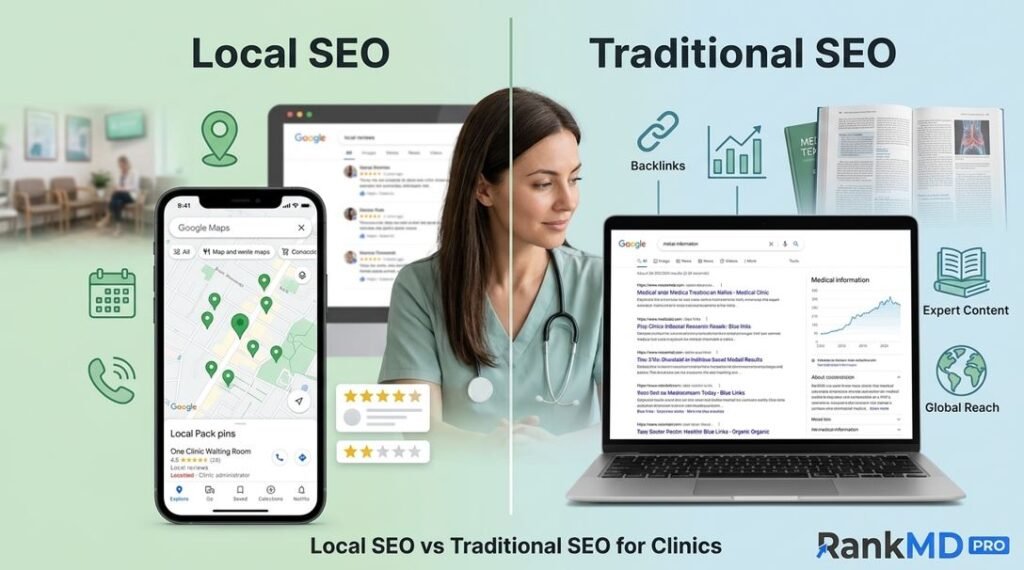
Aesthetic services are heavily localized because patients prefer practices that are easy to visit. Therefore, local search optimization is critical for capturing nearby traffic. Comprehensive local SEO for plastic surgeons ensures your website clearly features your:
-
City
-
State
-
Service area
-
Clinic address
-
Phone number
3. Having a Weak Google Business Profile
Your Google Business Profile helps local patients discover your practice quickly. Maintaining an optimized listing is a core pillar of Google Map ranking for clinics that highlights your:
-
Name
-
Address
-
Phone
-
Hours
-
Reviews
-
Photos
-
Services
4. Using One Page for Every Service
Combining all treatments onto a single page is a common structural error. If your clinic offers Botox, fillers, microneedling, and laser procedures, building individual dedicated pages is essential for successful site architecture for clinics. This gives search engines more focused content to crawl while giving patients a clear path to their desired treatment.
5. Writing Thin Content
Thin content offers little value to prospective patients. A service page with only a few sentences fails to answer important questions. Standard medical copywriting services require explaining treatments in simple terms, covering key details such as:
-
What the treatment does
-
Who may benefit
-
What to expect
-
Recovery guidelines
-
Common questions
-
When to book a consultation
6. Stuffing Keywords
While keywords are important for search engine optimization for med spas, repeating them unnaturally makes content difficult to read. Avoid awkward phrasing like: “Best Botox clinic for Botox in Chicago offering Botox treatments in Chicago”. Always use search terms naturally, prioritizing human readers first and search engines second.
7. Ignoring Search Intent
Search intent reflects what a user actually wants when typing a query. Someone searching “What is Botox?” wants educational information, whereas someone searching “Botox clinic near me” is ready to book. Integrating search intent analysis into your patient intent optimization strategy ensures every visitor gets the right answer.
8. Not Adding Strong Calls to Action
A user might love your website yet remain unsure of what steps to take next. Every key service page optimized through conversion rate optimization for clinics should feature a clear call to action, such as:
-
Book a consultation
-
Schedule your visit
-
Call our clinic
-
Request an appointment
-
Learn more about treatment
9. Making the Website Slow
Slow website performance frustrates visitors and drives them away. Technical website speed optimization focuses on compressing large media files, reducing unnecessary code, keeping page structures lightweight, and testing performance across both mobile phones and desktop computers.
10. Ignoring Mobile Users
Because a large percentage of patients search from smartphones, mobile responsiveness is vital. Effective mobile-first indexing strategies ensure text is easy to read, buttons are simple to tap, and inquiry forms are effortless to submit on mobile devices.
11. Poor Page Titles
Page titles help both search engines and users understand page topics. Vague titles like “Services” offer little value. A properly optimized title tag optimization approach looks like: “Botox in Chicago | Aesthetic Clinic,” keeping things clear and relevant.
12. Writing Weak Meta Descriptions
A well-crafted meta description improves click-through rates from search engine results pages. Best practices in SERP click-through rate enhancement involve writing natural summaries, such as: “Learn about Botox treatments in Chicago. See what to expect, who may benefit, and how to schedule a consultation.”
13. Forgetting Image SEO
Aesthetic websites feature heavy visual content, which requires proper optimization. Utilizing descriptive file names such as naming an image “botox-treatment-chicago.jpg” instead of a generic string enhances overall visual asset optimization performance alongside helpful alt text.
14. Not Showing Real Clinic Photos
Patients want transparency regarding where they will receive medical treatments. Showcasing authentic photography builds user trust, which complements local clinic branding and visibility campaigns by featuring your:
-
Clinic
-
Treatment rooms
-
Team
-
Reception area
-
Equipment
15. Ignoring Online Reviews
Patient reviews heavily influence consumer decisions and support local search visibility. Encouraging satisfied patients to share honest feedback and responding professionally is a key component of modern online reputation management.
16. Not Creating Helpful Blog Content
A robust blog attracts prospective patients early in their research journey. Incorporating educational queries into your medical content marketing plan by answering common questions such as how long Botox lasts or what to avoid after fillers establishes industry authority.
17. Ignoring Long-Tail Keywords
Long-tail keywords are specific, conversational phrases that usually face lower competition. Leveraging terms like “best Botox clinic for first-time patients in Chicago” or “laser hair removal for sensitive skin” is a powerful niche keyword targeting tactic to capture high-intent traffic.
18. Creating Duplicate Location Pages
Multi-location clinics often build separate pages for each target city. However, successful multi-location SEO for practices requires unique value on every page rather than copying templates and changing city names. Each location page should feature distinct staff details, local addresses, and unique descriptions.
19. Ignoring Internal Links
Internal links connect related pages on your website, guiding users and helping search engines navigate your content structure. Strategic internal linking architecture ensures blog posts link naturally to main service pages, and service pages link to booking sections.
20. Not Using Clear Website Navigation
A confusing menu layout causes visitors to abandon your site. A clean navigation structure optimized for UI/UX design for medical sites typically includes sections like Home, Treatments, About, Before and After, Blog, and Contact.
21. Ignoring Technical SEO
Technical health ensures search engines can easily crawl and index your pages. Common technical hurdles addressed by professional technical SEO audits include fixing broken links, resolving missing pages, restructuring site layouts, and clearing out duplicate metadata.
22. Not Tracking SEO Results
SEO should be guided by measurable data rather than guesswork. Monitoring key metrics is essential for evaluating your healthcare analytics tracking:
23. Ignoring Competitors
Analyzing competing practices that already rank for valuable terms provides deep insights. Benchmarking competitors as part of your competitive SEO analysis roadmap helps evaluate their service pages, blog topics, local listings, and conversion strategies.
24. Forgetting E-E-A-T Signals
Patients must trust their aesthetic medical providers completely. Highlighting qualified team members, clear clinical credentials, and accurate medical guidelines fulfills Google’s E-E-A-T criteria, which is a core pillar of trusted medical authority building.
25. Focusing Only on Rankings
While high rankings are exciting, they are not the ultimate goal. True business growth relies on converting visibility into revenue. Successful patient acquisition strategies aim to deliver qualified visitors, phone calls, patient consultations, and returning clients.
Why Good SEO Matters for Aesthetic Clinics?
Patients evaluate multiple providers before booking a cosmetic procedure. Your website must stand out by answering questions, building trust, simplifying bookings, and appearing right when users search for your specific treatments. Leveraging expert medical practice growth solutions helps your clinic reach the right audience at the ideal moment.
Final Thoughts
Common SEO errors can cost aesthetic practices valuable patients. Fortunately, most issues can be resolved with a structured approach. Focus on the fundamentals: target the right keywords, build comprehensive service pages, optimize local profiles, and maintain a fast, mobile-friendly platform. With a targeted aesthetic medical marketing strategy, your clinic can expand online visibility, attract qualified patients, and scale steadily. If you are searching for dedicated growth services for your medical practice, visit Rank Md agency.
Frequently Asked Questions:
-
What keywords should an aesthetic clinic use?
Focus on specific service, treatment, and location phrases, such as “Botox in Chicago” and structured targeted local SEO terms.
-
What should an aesthetic clinic blog about?
Write articles addressing real patient concerns, covering treatment preparation, aftercare, potential risks, and expected results.
-
Can old website content hurt SEO?
Outdated information loses relevance over time. Regularly auditing and refreshing key pages supports ongoing content maintenance practices.
-
What makes a good aesthetic service page?
A high-performing page explains procedures simply, answers frequent patient questions, and features clear booking pathways as part of a sound healthcare web design setup.
-
Is SEO better than paid ads?
They serve distinct marketing objectives. Paid ads deliver immediate visibility, whereas long-term organic marketing builds durable long-term assets. Many successful clinics combine both.