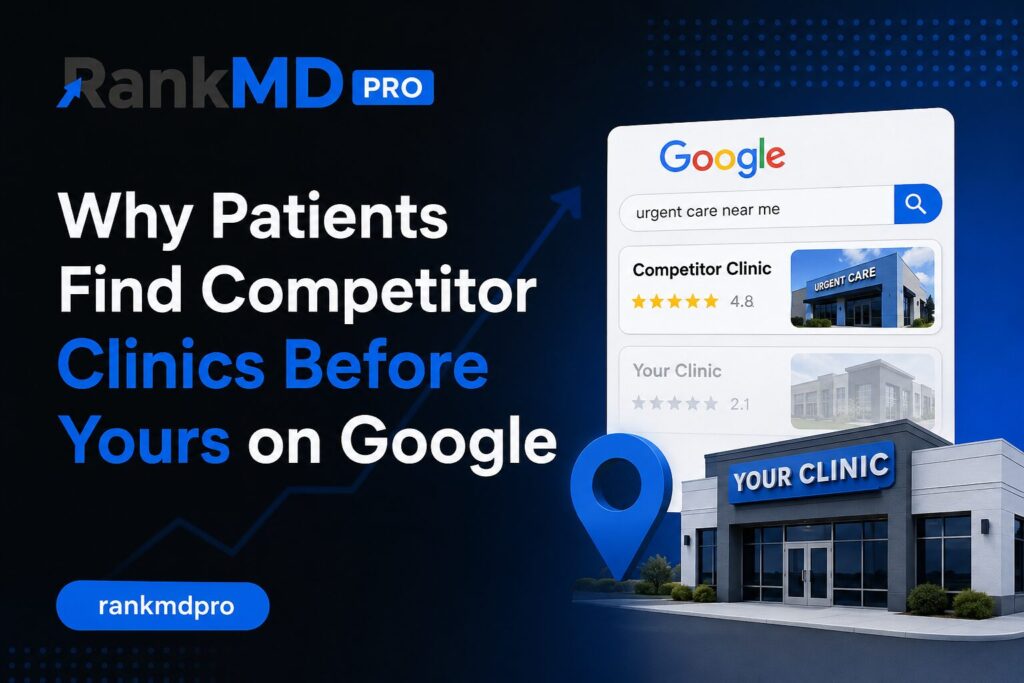
Many clinic owners ask the same question. “Why do patients find other clinics before they find mine on Google?” This is a common problem. Your clinic may offer great care. Your staff may be friendly. Your prices may be fair. However if patients could not find you online, they might select another healthcare center. Nowadays, maximum people search online before they book an appointment. They utilize Google to search healthcare centers near them. If your urgent care center does not display in the list, you lose patients. The great info is that this issue may be solved.
Why Google Rankings Matter:
Google is often the first place patients look. People search for things like:
- Urgent care near me
- Family doctor near me
- Walk-in clinic near me
- Pediatric clinic near me
- Medical clinic open now
Maximum users click one of the first few results. Very few people go to the second page. If your clinic is not near the top, many patients may never see it. That means fewer calls. That means fewer appointments. That means less revenue.
Main Reasons Competitor Clinics Rank Higher:
There are several reasons. Let’s look at the most common ones.
1. Your Google Business Profile Is Not Fully Optimized:
Your Google Business Profile is very important. It helps Google understand your clinic. Many clinics forget to update it. Some profiles have:
- Wrong phone numbers
- Old addresses
- Missing hours
- No photos
- No services listed
Google prefers complete profiles. A complete profile can rank higher.
What to Do:
- Add your correct clinic name
- Add your address
- Add your phone number
- Add business hours
- Upload quality photos
- List all services
Keep everything updated.
2. Competitors Have More Reviews:
Reviews help patients trust a clinic. Google also uses reviews as a ranking factor. A clinic with many positive reviews often ranks higher. Imagine this: Clinic A has 5 reviews. Clinic B has 200 reviews. Google may see Clinic B as more trusted.
What to Do:
Ask happy patients for reviews. Make the process easy. Send review requests after visits. Always respond politely to reviews.
Review Impact Table:
| Review Factor | Low Ranking Impact | High Ranking Impact |
| Number of Reviews | Low | High |
| Positive Ratings | Low | High |
| Review Responses | Low | High |
| Recent Reviews | Low | High |
| Patient Trust | Low | High |
3. Your Website Loads Slowly:
People do not like slow websites. Google does not like them either. Patients may leave before the page opens. This increases bounce rates. Google may lower rankings.
What to Do:
- Compress images
- Remove unnecessary plugins
- Use fast hosting
- Update website software
A faster website creates a better user experience.
4. Your Website Is Not Mobile Friendly:
Most healthcare searches happen on phones. Patients want quick answers. If your website looks bad on a phone, users leave. Google notices this.
What to Do:
Make sure your website:
- Fits all screen sizes
- Has easy navigation
- Uses large text
- Loads quickly
A mobile-friendly site can improve rankings.
5. Competitors Have Better Local SEO:
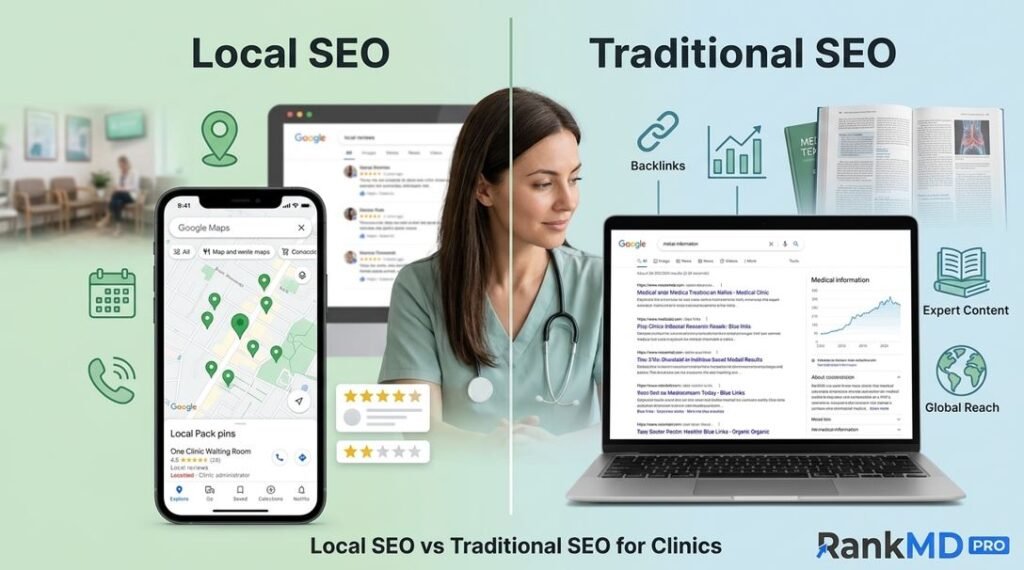
Local SEO assists healthcare centers display in local searches. Google wants to show nearby businesses. Many top-ranking clinics invest in local SEO. They use location-based keywords. Examples include:
- Urgent care in Dallas
- Family clinic in Houston
- Walk-in clinic in Chicago
What to Do:
Add your city name throughout your website. Create pages for each service area. Use local keywords naturally.
6. Your Clinic Has Weak Website Content:
Content helps Google understand your services. Many clinic websites have only a few pages. Competitors often publish useful articles. Google rewards helpful content.
What to Do:
Create pages about:
- Primary care
- Urgent care
- Vaccinations
- Physical exams
- Lab testing
Also write blog posts regularly. Helpful content attracts more visitors.
7. Competitors Earn More Backlinks:
Backlinks are links from other websites. Google sees them as trust signals. More quality backlinks can improve rankings.
What to Do:
Get links from:
- Local directories
- Medical associations
- Community websites
- Local news websites
8. Your Clinic Information Is Inconsistent:
Google checks clinic information across the web. This includes:
- Name
- Address
- Phone number
These are often called NAP details. If information is different on various websites, Google gets confused.
What to Do:
Use the same information everywhere. Check:
- Directories
- Social media profiles
- Review sites
- Business listings
Consistency helps rankings.
9. Competitors Use Better Keywords:
Keywords tell Google what your clinic offers. Many clinics use broad terms only. Competitors often target specific searches. Examples:
- Sports physicals near me
- Pediatric urgent care
- STD testing clinic
- Flu treatment clinic
What to Do:
Research keywords patients use. Add them naturally to your content. Avoid keyword stuffing.
10. Your Website Lacks Trust Signals:
Patients want to feel safe. Google wants the same thing. Trust signals help both. Examples include:
- Patient reviews
- Awards
- Certifications
- Doctor profiles
- Secure website connection
What to Do:
Show your credentials clearly. Add provider bios. Display testimonials. Use HTTPS security.
Signs Your Competitors Are Winning Online:
Watch for these signs:
- They appear above you in search results
- They have more reviews
- Their website looks newer
- They publish blogs often
- Their Google profile is active
- They appear in map results
Simple Steps to Rank Higher:
To rank your clinic website on google you can start with these steps:
Step 1:
Claim and optimize your Google Business Profile.
Step 2:
Collect more patient reviews.
Step 3:
Improve website speed.
Step 4:
Make your website mobile friendly.
Step 5:
Create helpful content.
Step 6:
Use local SEO strategies.
Step 7:
Build quality backlinks.
Step 8:
Keep clinic information consistent. Little evolutions may make huge outcomes over time.
Benefits of Better Google Rankings:
Higher rankings may assist your healthcare center in various ways.
More Visibility:
More people can find your clinic.
More Phone Calls:
Patients can contact you easily.
More Website Visits:
Better rankings bring more traffic.
More Appointments:
More visibility often leads to more bookings.
More Revenue:
More patients can increase income.
Stronger Trust:
Patients trust clinics they see often online.
Common SEO Mistakes Clinics Make:
Stay away from these mistakes:
- Ignoring reviews
- Using outdated websites
- Having missing contact details
- Not updating content
- Using slow hosting
- Forgetting mobile users
- Ignoring local SEO
Solving these problems may increase your clinic performance.
The Long-Term Value of urgent care SEO:
SEO is not a one-time task. Results often grow month after month. The clinics ranking today have usually worked on SEO for a long time. The earlier you take the step, the faster you may view outcomes. Good SEO keeps working day and night. It helps patients find your clinic when they need care.
Conclusion:
People frequently search competitor healthcare clinics first as those clinics have great online presence. They may have:
- Better Google Business Profiles
- More reviews
- Faster websites
- Better local SEO
- Stronger content
- More backlinks
You may increase your rankings on google. Improve your website. Ask for reviews. Create helpful content. As the time passes, Google may view your healthcare center as a reliable local urgent care center.
Frequently Asked Questions
1. Why is my clinic not showing on Google?
Your clinic may have poor local SEO, few reviews, incomplete business information, or weak website content.
2. How can I improve my Google ranking?
Optimize your Google Business Profile, get more reviews, improve website speed, and create helpful content.
3. Is urgent care SEO worth it for clinics?
Yes. SEO can increase visibility, patient inquiries, appointments, and long-term growth.
4. How often should I update my website?
Update your website regularly with new content, service pages, and helpful blog posts.
5. Can a Google Business Profile help my clinic?
Yes. A complete and active profile can improve local rankings and attract more patients.