Internal links are simple, but they are also exceptionally powerful. While many healthcare marketers focus solely on building external backlinks or chasing high-volume keywords, they often overlook the hidden potential of an internal linking structure. That is a major SEO mistake. Implementing smart internal linking techniques helps both human visitors and search engine crawlers navigate your site effortlessly. It makes your healthcare portal user-friendly while driving target pages higher up in search results. In this complete guide, you will learn the ultimate internal linking framework for urgent care websites designed to boost local traffic and patient conversions through expert urgent care SEO services.
What Is Internal Linking?
An internal link is simply a hyperlink that connects one page on your website to another page hosted on the very same domain. For instance:
-
Your homepage links directly to your primary medical services page.
-
Your walk-in urgent care page links to your digital X-ray services section.
-
Your educational blog post links straight to your online appointment booking page.
These interconnected paths help prospective patients seamlessly move through your site. At the same time, they allow search engines to crawl, index, and understand the structural relationship between your medical content pages when executing a high-impact urgent care search engine optimization campaign.
Why Internal Linking Matters:
Internal links perform several essential tasks for your medical clinic’s digital growth. They:
-
Help Google engines discover and index newly published medical content faster.
-
Signal to search algorithms which core service pages hold the highest priority.
-
Keep site visitors engaged longer by guiding them to relevant healthcare topics.
-
Help patients find fast, accurate solutions to their urgent health concerns.
-
Elevate the overall user experience (UX) across desktop and mobile devices.
-
Pass internal authority and PageRank from high-performing pages to newer ones.
-
Direct more organic search traffic to your clinic by solidifying your overall SEO for urgent care clinics.
Without a thoughtful internal link web, many valuable service pages remain hidden deep within your site, meaning fewer patients ever find them online.
Benefits of Internal Linking for Urgent Care Clinics:
Start with a Clear Website Structure:
Every high-ranking medical website requires a clean, logical hierarchy. Think of your site like a well-organized organizational tree. Your homepage sits proudly at the top. Directly below it rest your top-tier urgent care medical service pages, followed by sub-services, symptom guides, and educational articles. A high-converting structure looks like this:
Home
↓
Urgent Care Services
↓
Specific Treatment Pages
↓
Symptom Guides
↓
Blog Articles
↓
Contact & Booking Page
This clean layout makes navigating simple for patients seeking quick care, while helping search algorithms interpret your architecture when executing targeted urgent care digital marketing strategies.
Link Related Pages Together:
Only interlink pages that naturally share a contextual medical theme. Inserting random, irrelevant links causes confusion for readers and search engines alike. For example, a dedicated page explaining flu treatments should naturally link to:
-
Cold and sore throat treatments
-
High fever care guidelines
-
Rapid COVID-19 testing
-
Walk-in medical clinic services
-
Same-day urgent care options
Connecting medically aligned topics builds semantic relevance, showing search engines that your practice offers comprehensive care across a full range of urgent care marketing solutions.
Use Clear Anchor Text:
Anchor text is the visible, clickable text that holds a hyperlink. High-performing anchor text clearly describes the exact destination page to the reader before they click. Ideal medical anchor text examples include:
-
Urgent care for flu treatments
-
Walk-in clinic services near me
-
Immediate sports physical exams
-
On-site X-ray diagnostic services
-
Comprehensive occupational medicine care
Avoid vague phrases like:
-
Click here
-
Read more
-
Learn this
-
Visit this page
Descriptive language provides immediate context for patients while giving search crawlers clear keyword cues that boost your overall urgent care local SEO tactics.
Always Link to Important Service Pages:
Your primary service pages are your digital revenue drivers because they turn searching visitors into active patients. Because of their commercial importance, these core pages should receive the largest volume of internal links across your site. Priority targets include:
-
Urgent Care Services
-
Walk-In Clinic
-
Flu Treatment & Care
-
COVID-19 Testing
-
Digital X-Ray Services
-
Physical Examinations
-
Vaccination Services
-
Occupational Medicine
-
Pediatric Urgent Care
-
On-Site Lab Testing
Every informative blog post you write should intentionally link back to one or more of these core treatment pages as part of your broader urgent care organic growth strategy.
Connect Blog Posts to Services:
Many medical clinic blogs attract substantial organic search traffic, yet they often fail to convert those readers into actual clinic visits. The solution to this drop-off is simple: integrate contextual links within every blog post that lead directly to a relevant service booking page. For instance, an informational article discussing sore throat remedies should feature natural links pointing to:
-
Local walk-in clinic visits
-
Rapid strep throat testing
-
Emergency urgent care services
-
Same-day medical treatment options
This subtle structural change turns passive health research into real patient appointments through effective healthcare search engine optimization.
Link Service Pages Back to Helpful Blogs:
Internal linking must always function as a two-way street. While blogs should push authority up to service pages, your primary medical service pages should also link outward to helpful, in-depth blog guides. For example, your main Urgent Care overview page can link outward to supporting articles such as:
-
When to Visit Urgent Care vs. the ER
-
Understanding Cold vs. Flu Symptoms
-
First-Aid Tips for Minor Sports Injuries
-
Pediatric Fever Management Guide
This circular linking strategy enriches the patient experience and strengthens your overall domain setup using proved medical SEO best practices.
Build Topic Clusters:
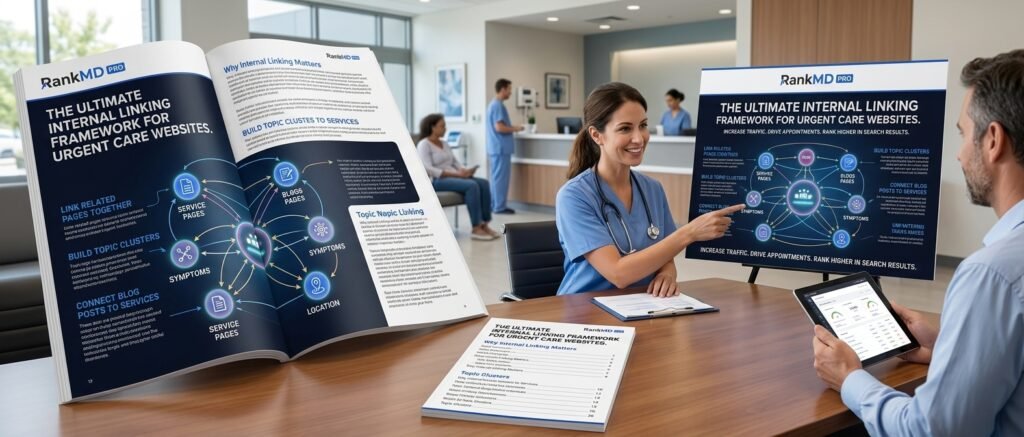
Modern search engines reward websites that demonstrate deep topical authority around specific healthcare subjects. To capture top rankings, organize your content into structured topic clusters containing one core hub page connected to multiple supporting articles.
Main Topic Hub Page: Urgent Care Services
Supporting Cluster Articles:
-
Cold Treatment Options
-
Identifying Flu Symptoms
-
Treating Ear Infections
-
Pink Eye Remedies
-
Seasonal Allergy Relief
-
High Fever Management
-
Sinus Infection Care
-
Minor Burn First Aid
-
Ankle Sprain Recovery
-
Laceration & Cut Care
Each supporting article links directly back to the main urgent care hub page, while the hub page links out to every supporting guide. This interlinked network establishes dominant search authority through strategic urgent care content optimization.
Link Location Pages Together:
If your practice operates multiple clinic locations across a city or region, each physical site requires its own dedicated location landing page. Consider a practice with:
-
Downtown Urgent Care
-
East Side Medical Clinic
-
North Suburbs Urgent Care
-
South City Walk-In Clinic
Each individual location page should cross-link to:
-
Nearby regional clinic locations
-
The primary urgent care services hub
-
The main contact and directions page
-
Online appointment booking forms
Cross-linking location pages reinforces your local footprint and improves Google Maps rankings using proven local SEO for urgent care centers.
Use Breadcrumb Navigation:
Breadcrumbs are contextual text trails usually situated at the top of a webpage that show users exactly where they sit within your site structure. For example:
Home > Services > Urgent Care > Flu Treatment
Breadcrumbs give visitors an effortless way to step back to higher-level pages, while automatically generating search-friendly internal links that support your urgent care website ranking strategies.
Add Links Inside Every Blog:
Avoid forcing all your internal links into a brief summary paragraph at the very bottom of your articles. Instead, weave relevant internal links naturally throughout the body content of every post where they genuinely add value for the reader. Inserting contextual links within the flow of useful information maximizes reader engagement and supports your overall urgent care website optimization.
Keep Important Pages Close to the Home Page:
High-priority landing pages should never be buried deep inside complex site subfolders. A prospective patient should always be able to reach your critical care pages within 2 to 3 clicks from your homepage. Priority pages include:
-
Core Urgent Care Services
-
Walk-In Clinic Information
-
Accepted Insurance Plans
-
Contact & Directions
-
Online Appointment Scheduling
-
Clinic Locations
Minimizing click-depth ensures both search crawlers and mobile users reach important conversion points effortlessly as part of your urgent care lead generation SEO.
Update Old Blog Posts:
Your legacy blog posts still hold valuable index authority, but they require periodic maintenance. Review older medical articles regularly and inject contextual links pointing to your newest medical services or updated location pages. For example, an older blog post about seasonal winter illnesses can easily be updated with links to:
-
Updated flu vaccination services
-
Modern rapid diagnostic testing
-
Same-day walk-in care options
Refreshing historic content breathes new life into old traffic channels through smart urgent care content marketing SEO.
Fix Broken Internal Links:
Broken internal links (404 errors) create frustration for users seeking fast care and signal poor site maintenance to search engines. Conduct routine site audits to uncover dead links and re-route them to active, relevant landing pages immediately. Keeping your internal paths clean and error-free is a foundational element of technical urgent care site performance SEO.
Use Navigation Menus Wisely:
Your primary website menu sits on every page, making it your most influential internal linking asset. Keep your top navigation clean, focused, and intuitive by including links to:
-
Home
-
Urgent Care Services
-
Clinic Locations
-
Insurance Accepted
-
About Our Practice
-
Medical Blog
-
Contact Us
A streamlined main menu prevents link clutter while highlighting your top high-converting pages to support your urgent care patient acquisition SEO.
Link to Contact and Appointment Pages:
Every medical service overview page should clearly guide patients toward taking immediate action. Integrate prominent call-to-action links pointing directly to:
-
The main contact page
-
Online scheduling forms
-
Walk-in wait-time monitors
-
Interactive driving directions
Streamlining conversion paths directly drives higher appointment bookings as part of your targeted urgent care SEO agency strategy.
Create Hub Pages:
A hub page serves as an authoritative, comprehensive resource guide covering a broad medical topic in depth. For example:
Broad Subject: Comprehensive Flu Care Hub
Connected Sub-Topics:
-
Recognized Flu Symptoms
-
Rapid Diagnostic Flu Testing
-
Prescription Flu Treatments
-
Annual Flu Prevention Tips
-
Vaccine Scheduling
-
When to Seek Immediate Urgent Care
Every detailed sub-page links back up to the main hub, while the hub references each sub-page. This hub-and-spoke model builds topical dominance using established healthcare website SEO standards.
Internal Linking Mistakes to Avoid:
Example Internal Linking Plan:
Best Practices for Internal Linking:
To maximize your site’s performance, stick to these core principles:
-
Interlink contextually related medical pages only.
-
Write clear, highly descriptive anchor text.
-
Maintain a clean, intuitive site navigation menu.
-
Keep historic blog content updated with new service links.
-
Bridge informational blog posts to high-converting service pages.
-
Connect core service pages back to helpful educational articles.
-
Insert internal links naturally within body text.
-
Audit your site regularly to catch and repair broken internal links.
-
Build organized topic clusters around core healthcare services.
-
Make finding immediate medical information effortless for every visitor.
Executing these steps boosts search engine visibility while enhancing the online patient experience through effective urgent care digital search tactics.
Final Thoughts:
Mastering internal linking is one of the most cost-effective, high-impact search engine strategies available for urgent care centers today. It costs nothing to implement, yet it yields substantial long-term results in organic traffic and patient growth. A well-structured internal link web helps search engines understand your medical authority while ensuring patients quickly find the immediate care they need. Every blog post should naturally lead toward a medical service, and every service page should answer deeper patient questions.
If you want to transform your clinic’s search performance and outrank local competitors, team up with proven specialists offering dedicated urgent care SEO services at Rank MD to scale your online presence today.
Frequently Asked Questions (FAQs):
1. Should every medical blog post link to a core service page?
Yes. Every informational blog post should naturally guide readers toward a corresponding medical service page whenever it fits the context of the article.
2. Do strategic internal links improve overall patient user experience?
Absolutely. Well-placed internal links allow patients to navigate directly to treatment information, clinic locations, and booking forms without frustration.
3. Can optimizing internal links increase online clinic appointments?
Yes. Removing navigation friction and guiding visitors smoothly to your contact and booking pages significantly increases conversion rates.
4. Should multi-location urgent care pages link to one another?
Yes. Interlinking location pages within the same geographic region improves local site structure and strengthens local map rankings.
5. What is the single biggest internal linking mistake clinics make?
The most common mistake is failing to connect related medical topics, leaving service pages isolated and difficult for both patients and search crawlers to find.