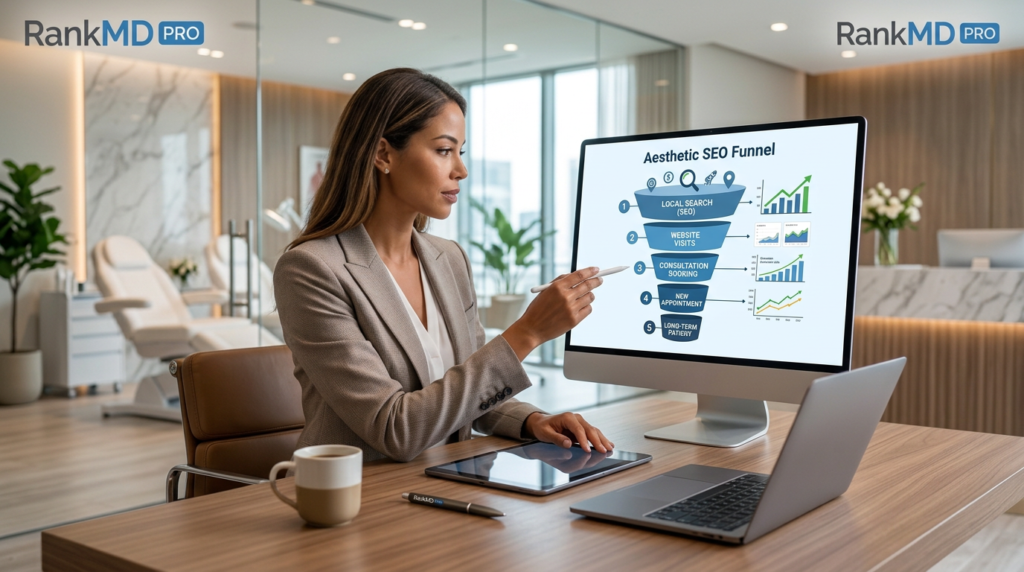
Aesthetic patients frequently search through the internet before they schedule an appointment for Botox, fillers, laser skin care, or body treatments. A few individuals are just searching for basic figures. Others are ready to book. These high-intent patients are very valuable. Your aim is to get traffic into calls, forms, and booked visits. This is where an aesthetic SEO campaign through RankMD Pro can help. In this guide, we will explain how to build a high-performing medical SEO funnel for high-intent aesthetic patients.
What Is an SEO Funnel?
An SEO funnel is a simple path. It starts with a search on Google and closes with a booked patient. For an aesthetic clinic specializing in medical aesthetics growth, the path usually looks like this:
Search → Website → Treatment Page → Trust → Contact → Appointment
Each step matters. If one step is weak, the patient might drop out. For instance, an aesthetic clinic might rank well in search engine results. Even so, its website might be slow or difficult to navigate. The patient may then choose a competing med spa. Therefore, an ideal digital marketing strategy is not just about keyword rankings. It is also about the full patient journey and conversion rate optimization.
What Are High-Intent Aesthetic Patients?
High-intent patients are much closer to taking action. They might already understand the exact treatment they need. They might also recognize what they want from a specialized dermatology clinic. Common high-intent searches include:
-
Botox near me
-
Lip filler clinic near me
-
Chemical peel clinic
-
Skin clinic near me
-
Book Botox consultation
-
Facial filler consultation
-
Cosmetic clinic in Las Vegas
These searches show strong intent. The patient is often ready to call or book. Your local search optimization plan should target these precise terms to drive organic medical traffic.
Step 1: Map the Patient Search Journey
Start by thinking like a patient. A patient searches in stages. First, they ask a question. Then, they explore treatments. Next, they compare practices. Finally, they look for a place to book. Your content strategy should support each stage of this journey.
The Four Main Search Stages
| Stage | Patient Goal | Example Search | Best Content Format |
| Awareness | Learn | What is microneedling? | Educational Blog |
| Research | Compare | Botox vs fillers | Detailed Guide |
| Intent | Find a provider | Botox near me | Optimized Service Page |
| Action | Book | Botox consultation near me | Secure Booking Page |
Step 2: Find High-Intent Keywords
Keyword research is a key part of the funnel. Do not focus only on high search volume. A keyword with fewer searches often brings far more actual bookings. For example, “What is Botox?” gets many searches, but “Botox clinic near me” shows much stronger commercial intent. So, look for keywords that show a direct need for medical spa services. Use terms such as near me, clinic, provider, treatment, consultation, appointment, cost, pricing, booking, specialist, and medical aesthetics services.
Step 3: Build Strong Treatment Pages
Your treatment pages are the core of the healthcare SEO funnel. Each major service should have its own dedicated landing page. For example, a clinic should build individual pages for Botox, dermal fillers, laser hair removal, microneedling, chemical peels, skin tightening, and body contouring.
Each page should answer the main patient questions clearly. Keep the text simple and easy to read. Explain what the treatment is, who it helps, what happens during the procedure, what recovery looks like, when results appear, and how to request a consultation with your medical team.
Step 4: Add Local SEO Signals
Aesthetic patients always want a clinic close to their home or office. Local SEO helps your practice appear prominently in Google Local 3-Pack searches. Start with your Google Business Profile. Make sure your profile has correct details, including your business name, address, phone number, website, working hours, services, and clear clinic photos. Keep these details updated. Your website should also include clear local information across all web pages.
Step 5: Create Location Pages
Location pages help clinics reach patients in nearby neighborhoods. This is especially useful for medical practices with multiple branches. A valuable location page should include your exact clinic address, contact details, specific treatments offered, nearby areas served, parking instructions, driving directions, local patient questions, and direct booking options.
Step 6: Use Content to Build Trust
Aesthetic treatments feel very personal to the consumer. Patients want to feel safe and secure. They also want to know who will perform their procedures. Your website should showcase real clinical expertise. Add detailed profiles about your licensed medical practitioners, including their training, certifications, years of experience, professional background, and personalized treatment approach.
Step 7: Use Before-and-After Content Carefully
Before-and-after photos are powerful assets for aesthetic practices. They help patients visualize possible outcomes. Use clear, high-resolution images and add honest context explaining what procedure was performed. Never make unrealistic promises, as cosmetic results vary from person to person. Always follow medical marketing guidelines and platform policies. Trust must always come first in healthcare advertising.
Step 8: Improve Your Website Experience
SEO brings a patient to your website, but your web design must keep them there. A good site loads fast and works smoothly on mobile phones. Many patients search for treatments on mobile devices while on the go. Make important contact details easy to find. Your phone number and booking button should be clearly visible. Keep your website menu simple with links to treatments, about us, results, reviews, locations, and contact pages.
Step 9: Add Strong Calls to Action
Every high-intent page needs a clear call to action. A call to action tells the prospective patient what step to take next. Examples include Book a Consultation, Schedule Your Visit, Request an Appointment, Call Our Clinic, and Contact Our Team. Place these buttons near the top of the page and at natural stopping points within the text.
Step 10: Use Reviews to Build Confidence
Patient reviews build immense social proof. People naturally want to read about the real experiences of others before undergoing cosmetic procedures. Ask your satisfied patients to leave honest reviews on Google. Keep the review process simple and transparent. Display authentic testimonials directly on your website to reinforce confidence and credibility.
Step 11: Make Booking Easy
This is one of the most important steps in conversion rate optimization. When a patient is ready to book, do not make the process complicated. Your booking form should ask for only essential details first, such as name, phone number, email, desired treatment, and preferred date. You can collect extra medical history later. Also, offer multiple contact choices, as some patients prefer forms while others prefer direct phone calls or online widgets.
Step 12: Connect SEO With Conversion Tracking
Organic traffic alone does not measure true campaign success. You need to track what happens after a user clicks. Monitor actions such as phone calls, form submissions, online bookings, consultation requests, and treatment page visits. Compare these conversion metrics with your organic search data to identify which pages drive the highest value for your aesthetic practice.
SEO Funnel Metrics to Track
| Funnel Step | Metric to Monitor | Primary Goal |
| Search | Impressions | Increase brand visibility |
| Search | Keyword Rankings | Reach top search positions |
| Website | Organic Clicks | Attract target visitors |
| Treatment Page | User Engagement | Keep users interested |
| CTA | Click-Through Rate | Prompt immediate action |
| Contact | Lead Inquiries | Generate new patient leads |
| Booking | Completed Appointments | Convert visitors into patients |
| Revenue | Treatment Value | Measure overall business growth |
Step 13: Build Internal Links
Internal links connect related pages across your website. They help users navigate smoothly and help search engine crawlers understand your site architecture. For instance, a blog post about anti-aging skincare can link directly to your Botox service page, while a location page can link to your main aesthetic treatments. Keep your anchor text natural and relevant to the linked page.
Step 14: Keep Improving the Funnel
An SEO funnel is an ongoing strategy rather than a one-time project. Patient preferences, search trends, and clinic offerings change over time. Review your analytics data regularly to find pages that attract traffic but generate few appointments. Update those pages by rewriting headlines, adding deeper treatment details, improving page speed, and refining calls to action.
Frequently Asked Questions:
1. How can I improve aesthetic clinic conversions?
Make your website fast, mobile-friendly, and simple to navigate. Use clear calls to action, provide detailed treatment descriptions, add verified trust signals, and streamline the appointment booking process.
2. Are reviews important for aesthetic SEO?
Reviews build immense consumer trust and directly support local map pack visibility. Always collect and display honest patient feedback to strengthen your reputation.
3. How many keywords should one page target?
Focus each web page around one core topic and primary service, integrating related semantic keywords naturally throughout the copy without keyword stuffing.
4. Should every treatment have its own page?
Yes. Dedicated landing pages give each major cosmetic treatment a focused opportunity to rank for high-intent search queries.
5. What is the most important part of an aesthetic SEO funnel?
The entire patient journey matters. However, targeting high-intent keywords, building robust treatment pages, establishing trust, and simplifying the appointment booking process are the most critical pillars for success.