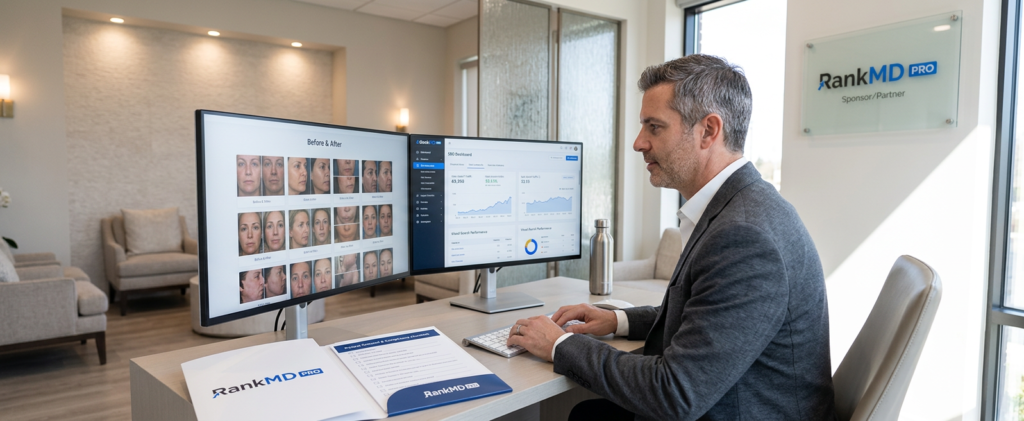
Transforming patient “before-and-after” searches into steady organic traffic requires five essential elements: treatment-specific photo galleries, precise image file optimization, structured schema data, detailed textual case studies for every visual, and strict compliance with patient consent protocols.
RankMD Pro successfully integrates all five components into a unified visual content strategy that helps cosmetic practices capture high-intent patients who are actively comparing treatment outcomes and are nearly ready to schedule a consultation a critical driver for effective aesthetic practice marketing and SEO.
Why Before-and-After Searches Matter
-
High search intent: Patients browsing visual results are typically much further down the booking funnel than individuals conducting general exploratory research.
-
Visual validation: Consumers considering cosmetic treatments need concrete proof of a provider’s skill. A well-organized gallery builds far more trust and credibility than pure text descriptions of a service.
-
Local SEO boost: Combining specific procedures with geographical targets (such as “lip filler before and after [city]”) attracts highly motivated, locally oriented patients who want care nearby strengthening overall aesthetic clinic SEO performance.
5 Ways to Turn Before-and-After Content Into Ranking Pages
1. Build dedicated landing pages per treatment
Avoid lumping every procedure into one massive, messy photo album. Create a distinct, dedicated page devoted exclusively to “Botox Before and After” photos and another separate page for “Lip Filler Before and After” images. This targeted approach allows search engines to optimize each URL for its specific keyword phrase, maximizing your broader cosmetic surgery SEO impact.
2. Optimize image SEO
Never upload raw, camera-generated filenames like IMG_8821.jpg. Label your image files descriptively before uploading using slugs such as lip-filler-before-and-after-[city].jpeg. Furthermore, every image must include descriptive alt text detailing the patient’s underlying concern, the specific cosmetic treatment performed, and the final outcome. Without this metadata, visual assets remain completely invisible to search engine crawlers.
3. Add structured data and schema
Implementing relevant medical business or local service schema markup onto your before-and-after pages gives search engines explicit context regarding the visual content on display. Proper schema integration supports advanced dermatology SEO and helps your visual results stand out.
4. Write detailed case studies alongside the photos
Pairing photos with informative text including the patient’s age, skin type, treatment goals, recovery duration, and techniques used gives Google the rich long-tail keywords it needs to rank your page. It also answers the exact questions prospective patients are asking. RankMD Pro crafts accompanying copy targeting high-value long-tail phrases like “timeline of swelling after non-surgical rhinoplasty” to fuel your aesthetic medicine SEO growth.
5. Maintain strict compliance and consent
Always secure formal, written consent from patients before publishing their images online. Ensure consistency by using uniform lighting conditions, identical photo angles, and makeup-free comparisons. Always display a clear disclaimer noting that individual cosmetic outcomes may vary.
How RankMD Pro Builds Before-and-After Content That Converts
RankMD Pro treats before-and-after galleries as powerful, standalone optimization assets rather than treating them as an afterthought tacked onto a service page. By engineering dedicated page architectures, optimizing image assets, applying precise schema markup, and writing compliant case-study copy, your photo galleries will reliably rank for high-intent visual searches while strictly adhering to medical marketing compliance standards through targeted plastic surgery SEO frameworks.
Final Thoughts
For aesthetic practices, before-and-after searches represent some of the highest-intent traffic available on the web provided the gallery is engineered for search success through dedicated landing pages, optimized image files, structured schema data, and comprehensive case-study copy backed by strict consent compliance.
Frequently Asked Questions
Do before-and-after photos actually help SEO?
Yes, but only if they are correctly titled, alt-tagged, and backed by descriptive text content. An untagged photo gallery provides zero text signals for Google to interpret, leaving it unindexed regardless of how impressive the clinical results look.
Do I need written consent to publish a patient’s before-and-after photos?
Yes. Explicit written consent must be secured before publishing any patient photographs, regardless of how the images are licensed or displayed for marketing purposes.
How should before-and-after images be named and tagged for SEO?
Use descriptive, keyword-relevant filenames that combine the treatment and location, paired with detailed alt text explaining the patient concern, procedure, and result never use generic camera filenames.
Does RankMD Pro handle the compliance and consent side, or just the SEO structure?
RankMD Pro handles the technical SEO architecture, page layout, image optimization, schema markup, and case-study copywriting. Legal documentation and patient consent sign-offs must still go through your practice’s internal medical or legal review process.
How long before before-and-after content starts driving traffic?
Similar to standard medical service pages, meaningful ranking momentum typically appears within 3 to 6 months, with continuous growth as your gallery and case-study library expand.