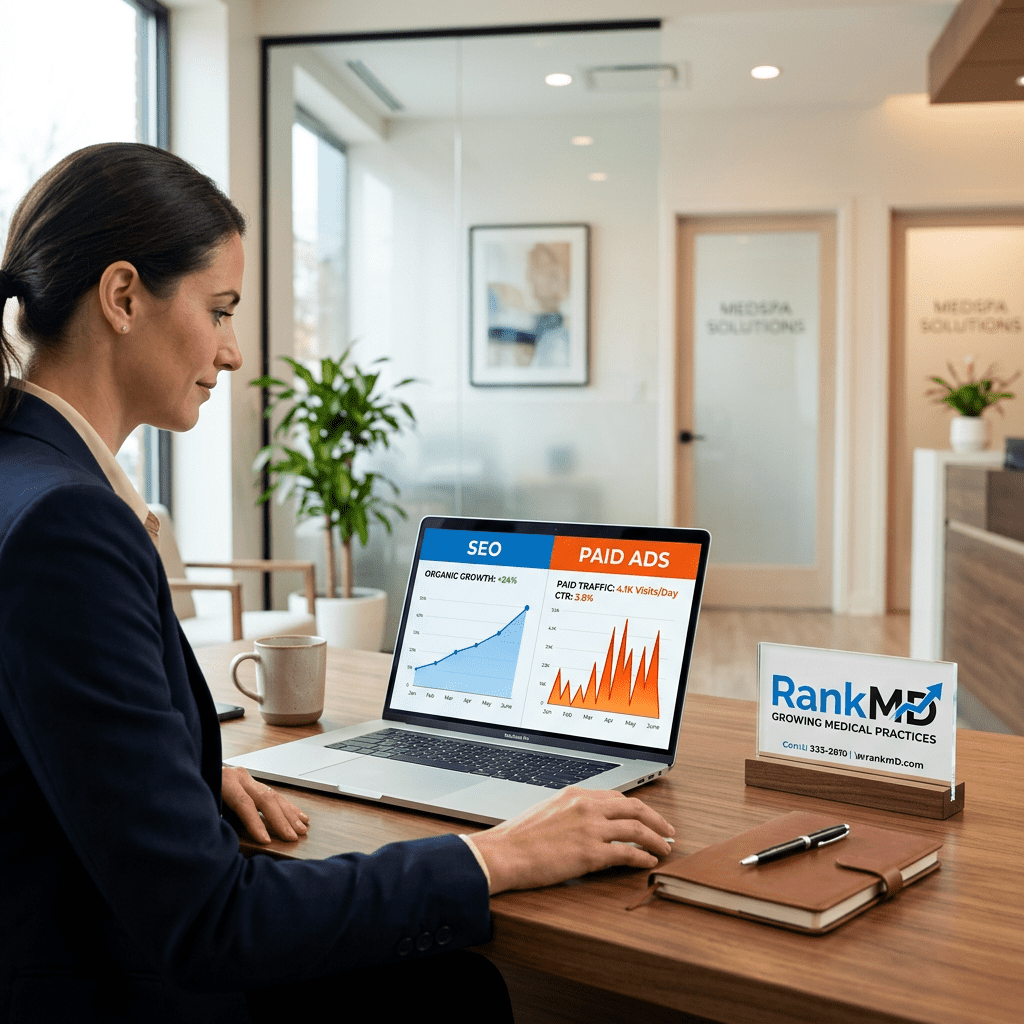
Plastic surgery is a high-value field where a single new patient can bring in thousands of dollars in lifetime value, making patient acquisition deeply important. In 2026, two major digital growth strategies search engine optimization and paid advertising help plastic surgery clinics expand their online presence. Both channels guide high-intent patients to your practice, but they operate through entirely different mechanisms. Paid ads capture instant visibility, whereas specialized aesthetic SEO builds sustainable, long-term traffic over time. This guide compares both strategies in clear, accessible terms and demonstrates how aesthetic practices can harmonize them for maximum revenue growth.
SEO vs. Paid Ads: The Basic Difference
Search engine optimization helps your website appear naturally in organic search outcomes without requiring a direct payment to search engines for every click. Instead, you invest in high-quality medical content, technical website enhancements, local map pack optimization, and professional backlinking. Paid search operates quite differently: you pay each time a user clicks your advertisement for specific target phrases. For instance, a clinic might bid on terms like “rhinoplasty surgeon near me” to secure top placement instantly. Both approaches offer immense value, but the core distinction is straightforward: paid ads buy immediate traffic, while aesthetic SEO builds a compounding digital asset that continues working for your practice over time.
SEO ROI for Plastic Surgery Practices
Organic optimization typically requires several months of consistent work to achieve strong, stable rankings. The exact timeline depends heavily on your local market, city competition, existing website strength, and specific procedure focus. However, organic search offers one massive advantage: organic traffic has no direct cost per click. For instance, a top-tier aesthetic clinic frequently targets high-value searches such as:
-
Plastic surgeon near me
-
Rhinoplasty surgeon
-
Breast augmentation surgeon
-
Facelift surgeon
-
Tummy tuck surgeon
-
Mommy makeover surgeon
-
Liposuction surgeon
-
Plastic surgeon in Las Vegas
Why SEO Can Have Strong Long-Term ROI
Organic search acts as a true digital asset. A well-optimized procedure page can rank prominently for months or even years, while an educational blog consistently attracts prospective patients through search engines. Furthermore, a strong Google Business Profile combined with authentic patient reviews improves local trust and map visibility. Because these gains compound over time, investing in professional aesthetic SEO services through a specialized growth agency like RankMD Pro helps clinics reduce their long-term reliance on expensive ad spend.
Paid Ads ROI for Plastic Surgery Practices
Paid search advertising offers a distinct advantage in terms of speed. A properly structured Google Ads campaign can start generating prospective patient inquiries almost immediately after launch. Industry benchmarks highlight that aesthetic medicine is a high-cost category, with average cost-per-click values often exceeding $7.50 depending on the market. Highly competitive surgical terms like rhinoplasty, facelift, and mommy makeover command even higher budgets. While this upfront expense can feel steep, the immediate influx of targeted traffic makes paid ads an effective tool for rapid patient acquisition.
SEO vs. Paid Ads: ROI Comparison
Which One Costs More?
Organic optimization requires an upfront investment to build a solid technical and content foundation. Essential elements include:
-
Technical website performance
-
Dedicated surgical service pages
-
Localized landing pages
-
Authoritative medical content
-
Local map optimization
-
Strategic backlink acquisition
-
Conversion rate optimization
Conversely, paid search requires a continuous media budget alongside management fees. Both channels demand financial commitment, but they allocate capital differently. While paid ads require ongoing funding to maintain traffic flow, medical SEO creates permanent visibility that lowers your average acquisition cost as your rankings mature.
SEO Has a Compounding Effect
Imagine investing a steady monthly budget into comprehensive aesthetic SEO services. Initially, organic traffic growth may appear modest, but as your search rankings improve, your visitor volume scales significantly:
-
500 organic visits per month
-
1,000 organic visits per month
-
2,000 organic visits per month
-
4,000 organic visits per month
While exact figures vary based on your local market and website authority, the primary advantage is that you are not paying search engines a fee for every single visitor. This compounding effect makes organic search increasingly profitable as your practice grows.
Paid Ads Give You More Control
Paid search advertising grants plastic surgery marketing teams precise control over audience targeting. You can instantly adjust:
-
Targeted keywords and negative match terms
-
Geographic service radiuses
-
Daily and monthly ad spend budgets
-
Specific surgical procedures
-
Custom landing pages
-
Active ad schedules
This flexibility allows you to pause underperforming campaigns or scale up spending on high-margin procedures that yield strong consultation rates. Partnering with a specialized partner like RankMD Pro ensures your ad spend is directed toward profitable patient demographics.
The Best Strategy May Be Both
For most plastic surgery practices, the most effective approach combines both channels. Paid ads deliver immediate patient volume while your long-term aesthetic SEO strategy develops in the background. Over time, strong organic rankings reduce your financial dependence on paid clicks. Additionally, paid search data helps validate keyword performance. If an ad campaign reveals exceptional conversion rates for terms like “mommy makeover surgeon in Miami,” that exact data can guide your organic content creation, bridging paid acquisition with sustainable search visibility.
How to Measure SEO ROI
Evaluating organic search success requires looking far beyond basic keyword rankings. True campaign value is measured by revenue-driven metrics, including:
-
Organic traffic growth
-
Form submissions and web inquiries
-
Direct phone calls from the website
-
Consultation requests
-
Booked consultations
-
New surgical procedures
-
Total procedure revenue
-
Overall cost per patient acquisition
Because patients often research multiple times before booking, utilizing multi-channel attribution ensures you accurately credit your organic search presence for driving consultations.
How to Measure Paid Ads ROI
Paid campaigns require deep analytical tracking to ensure your ad spend translates into high-value surgical bookings. Key metrics to monitor include:
-
CPC: Measures how much you pay per click.
-
CTR: Indicates ad creative engagement.
-
Conversion rate: Evaluates landing page performance.
-
CPL: Tracks the cost of acquiring a lead.
-
Cost per consultation: Measures efficiency.
-
Booking rate: Assesses lead qualification.
-
Case acceptance: Reflects consultation closing success.
-
Revenue per patient: Determines financial value.
-
ROAS: Compares total revenue directly against ad spend.
When SEO Is the Better Choice
Organic optimization is ideal when your practice wants to build a resilient, long-term digital asset. It is especially valuable when:
-
You want sustainable, compounding growth.
-
Your website has established domain authority.
-
You practice in a highly competitive metropolitan market.
-
You want to lower long-term patient acquisition costs.
-
You offer multiple high-margin surgical procedures.
-
You want to establish dominant brand visibility and trust.
When Paid Ads Are the Better Choice
Paid search advertising serves as the preferred tactical solution when your clinic needs immediate patient volume. It is especially useful when:
-
You need to generate patient inquiries quickly.
-
You are opening a brand-new practice location.
-
You are launching a new aesthetic service or technology.
-
Your current organic rankings are still developing.
-
You have open consultation capacity in your surgical schedule.
-
You want to test new keyword demand rapidly.
What About AI Search in 2026?
Patient research habits are evolving rapidly. Today, prospective patients frequently utilize conversational AI tools to research plastic surgeons, compare procedures, evaluate pricing, and understand recovery risks. This shift places even greater importance on establishing verified online authority. Modern aesthetic SEO must go beyond traditional keyword targeting by publishing authoritative, expert-led content that directly answers complex patient questions across all digital touchpoints.
SEO vs. Paid Ads: Which Gives Better ROI?
There is no single winner between these two powerhouse marketing channels. Paid search excels at delivering immediate patient acquisition, while organic optimization wins on long-term asset value and cost efficiency. For most successful plastic surgery practices, the ideal growth strategy integrates both: use paid search to capture high-intent demand today, and build robust aesthetic SEO campaigns to secure sustainable market leadership tomorrow. Track every metric against real patient revenue, and partner with industry experts like RankMD Pro to scale your practice efficiently.
Frequently Asked Questions:
1. Is SEO better than paid ads for plastic surgeons?
Neither is universally better; they serve different purposes. Organic optimization provides superior long-term ROI and brand authority, whereas paid ads are ideal when your practice needs qualified leads and consultations immediately.
2. How long does plastic surgery SEO take?
Building competitive organic rankings typically takes several to many months. The exact timeline depends on your geographic market, local competition, baseline website strength, and the thoroughness of your aesthetic SEO strategy.
3. Are Google Ads expensive for plastic surgeons?
Yes, they can be quite costly. Plastic surgery keywords carry high cost-per-click values because the financial value of a surgical procedure and market competition are both exceptionally high.
4. What SEO pages should a plastic surgeon create?
Practices should begin with dedicated, high-converting service pages for primary procedures like rhinoplasty, breast augmentation, and facelifts, followed by educational blog content and location-specific landing pages that match local search intent.
5. Should every plastic surgery service have its own landing page?
Yes. Creating dedicated, conversion-optimized pages for major surgical offerings allows your practice to better match patient search intent, improve ad campaign Quality Scores, and support your broader aesthetic SEO goals.