If you have spent money on urgent care SEO, you should naturally want to track the actual business outcomes. Many healthcare center owners invest heavily in digital marketing for urgent care every single month, yet they remain unsure if their strategy is actually delivering results. That is a major gap. Effective urgent care search engine optimization must consistently bring more patients through your doors and fuel long-term clinic growth. The most reliable way to gauge your progress is by keeping a close eye on key performance indicators (KPIs). These specific metrics tell you whether your online presence is improving or declining, while helping you make smarter, data-driven decisions for your facility. In this guide, you will discover the most critical metrics to monitor every month.
What Is an SEO KPI?
An SEO KPI is simply a clear metric used to evaluate the true success of your urgent care SEO campaigns. It gives you straightforward answers to essential performance questions:
-
Are more local patients finding your medical practice?
-
Is your website attracting a steady flow of new online visitors?
-
Are prospective patients picking up the phone to call your reception desk?
-
Is your daily schedule filling up with more online appointment bookings?
-
Is your local business listing generating valuable patient inquiries?
Without tracking these indicators, you are merely guessing about your performance. By consistently measuring them, you gain precise clarity on what is working and what needs adjustment within your clinic local search strategy.
Why Monthly Tracking Matters
Search engine optimization is an ongoing process rather than a one-time fix, and real progress takes time to build. That is precisely why setting up a monthly tracking routine is vital for sustainable urgent care SEO success. Regular monitoring empowers your team to:
-
Identify technical issues or ranking drops before they impact your patient intake.
-
Document steady traffic growth and brand visibility over time.
-
Spot underperforming web pages and update them with better information.
-
Boost inbound phone calls and online appointment scheduling.
-
Achieve a higher return on investment from your ongoing healthcare SEO marketing budget.
Top Urgent Care SEO KPIs
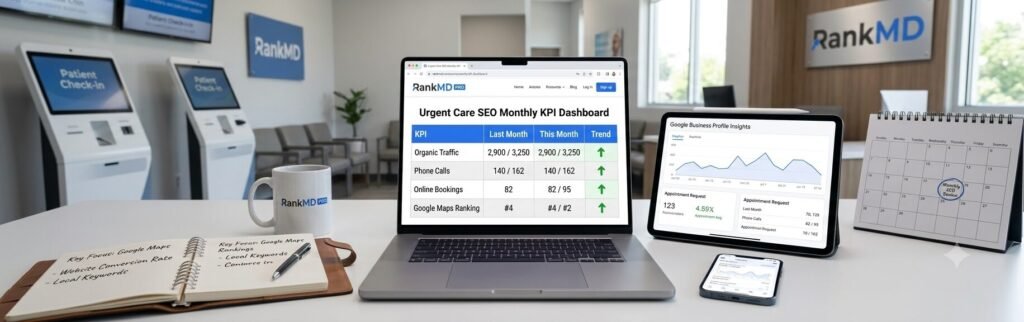
The performance table below breaks down the foundational metrics that every healthcare provider should track when evaluating their monthly urgent care SEO performance.
1. Organic Traffic
Organic traffic represents the steady stream of website visitors who discover your clinic naturally through search engine results rather than paid advertisements. These users are actively searching for quick medical care using terms like:
-
urgent care near me
-
walk-in clinic
-
flu treatment
-
sports physical
-
X-ray near me
A consistent rise in organic visits usually indicates that your urgent care SEO initiative is heading in the right direction. Tracking this number monthly helps you spot broader growth trends or alert you if a sudden dip requires immediate investigation.
Why It Matters:
Higher visitor numbers give your facility far more opportunities to turn online searchers into walk-in patients. If your web traffic suddenly drops, it often means key service pages have lost search positions—a critical sign to audit your medical website SEO health.
2. Google Keyword Rankings
Keyword rankings reflect where your medical website appears on Google when people search for specific healthcare services. Common examples include:
-
urgent care clinic
-
urgent care open now
-
pediatric urgent care
-
urgent care for fever
By tracking these keyword positions monthly, you can measure how effectively your urgent care SEO strategy moves your pages upward. Moving a high-value service page from Page 2 to the top of Page 1 frequently leads to a dramatic boost in new patient inquiries.
Good Ranking Goals:
-
Positions 1–3: Excellent local market dominance.
-
Positions 4–10: Very good Page 1 search presence.
-
Positions 11–20: Needs further content and link optimization.
-
Position 21+: Poor online visibility requiring stronger urgent care SEO efforts.
3. Google Business Profile Performance
Your Google Business Profile serves as the digital front door for your local facility. Many patients in urgent need of medical attention bypass main websites entirely and contact clinics directly through Google Maps, making this profile an essential part of local urgent care SEO. Key metrics to review include:
-
Total business profile views
-
Direct phone calls generated
-
Driving direction requests
-
Clicks through to your main website
-
Local photo and facility views
4. Phone Calls
Inbound phone calls are among the clearest signs that your urgent care SEO campaign is generating real business value. Patients seeking immediate medical treatment usually call reception to confirm wait times, insurance coverage, or operating hours. You should regularly monitor:
-
Overall call volume from all digital channels
-
Calls initiated directly from your Google local listing
-
Calls clicked from main service pages
-
Calls originating specifically from mobile devices
Tracking these figures helps confirm that your healthcare digital marketing attracts patients who need immediate care.
5. Appointment Requests
Modern healthcare consumers expect convenient, digital options for reserving care. Measuring how many users fill out reservation forms gives you a clear look at how well your site performs. Focus on tracking patients who:
-
Book online appointments
-
Submit intake or contact forms
-
Use “save a spot in line” features
-
Complete pre-registration steps
A steady increase in these completed actions demonstrates that your urgent care SEO services are successfully targeting ready-to-book patients.
6. Website Conversion Rate
A conversion occurs whenever a casual website visitor takes a meaningful action that turns them into an active patient lead. Core conversion actions include making a phone call, booking a visit online, or submitting a contact form.
To find this metric, use the standard formula:
Conversion Rate = (Total Conversions ÷ Total Visitors) × 100
Example: If your site receives 1,000 visitors in a month and generates 60 appointment bookings, your website conversion rate is 6%. Monitoring this rate helps ensure your urgent care SEO campaign attracts high-intent visitors who actually convert into real appointments.
7. Click-Through Rate (CTR)
Click-Through Rate (CTR) measures the percentage of searchers who click on your clinic’s website link after seeing it listed in Google search results. For instance, if your clinic appears 500 times in search listings and receives 50 clicks, your CTR sits at 10%. Improving page titles, meta descriptions, and schema markup as part of your ongoing urgent care search engine marketing will help earn more clicks from prospective patients.
8. Local Keyword Rankings
Since urgent medical care is inherently local, most prospective patients search using location-based terms such as:
-
urgent care near me
-
urgent care in Las Vegas
-
walk-in clinic near me
-
same-day clinic
It is essential to track your search positions across every city, neighborhood, and zip code you serve. If you manage multiple locations, dedicated tracking ensures that your multi-location urgent care SEO campaign builds local dominance for every individual clinic.
9. Google Reviews
Patient reviews are vital because they directly influence both human trust and local search rankings. Prospective patients rely heavily on recent feedback before choosing where to seek care. As part of a well-rounded urgent care SEO roadmap, track:
-
Total review count across key directories
-
Volume of new reviews added monthly
-
Overall average star rating
-
Your staff’s response rate to patient feedback
Consistently earning fresh, positive reviews strengthens overall trust while signaling relevance to Google’s local medical search algorithms.
10. Google Maps Rankings
Securing a top position in the Google Maps Local 3-Pack is one of the most effective ways to drive steady patient traffic. When your practice appears in these top map spots, phone calls and direction requests naturally increase. Tracking map positions monthly ensures your local urgent care SEO setup remains competitive against nearby healthcare providers.
11. Website Bounce Rate
Bounce rate reflects the percentage of visitors who leave your website after viewing only one page without taking any action. A high bounce rate often points to underlying user experience issues, such as:
-
Slow loading speeds on mobile devices
-
Confusing or cluttered navigation menus
-
Outdated content that fails to answer patient questions
-
Disconnects between search intent and landing page information
Lowering your bounce rate through proper urgent care SEO optimization helps keep prospective patients engaged longer, increasing the likelihood that they will call or book a visit.
12. Page Speed
Today’s patients demand fast, seamless user experiences on mobile and desktop screens. A slow website creates frustration and causes prospective patients to click away to a competitor. Monitoring site speed performance, Core Web Vitals, and mobile usability should be a core component of your technical urgent care SEO plan.
13. Mobile Traffic
The vast majority of urgent care searches happen on smartphones by individuals who need immediate care on the go. That makes tracking mobile visitors, call clicks, and mobile booking completions vital. Ensuring your site has responsive layouts, readable text, and easily tapeable buttons is essential for strong mobile urgent care SEO rankings.
14. Indexed Pages
Search engines must first discover, crawl, and index your web pages before they can show them to potential patients. Regularly check Google Search Console to verify:
-
Total number of pages correctly indexed
-
Important service pages missing from the index
-
Technical crawl errors or broken links
Resolving indexing issues promptly ensures that your latest service offerings receive maximum visibility through your urgent care SEO tactics.
15. Backlinks
Backlinks—links pointing to your site from reputable external websites—act as votes of confidence in the eyes of search engines. Building high-quality, relevant links builds authority and strengthens your online presence. Tracking total links, new link acquisitions, and link health is an essential off-page component of urgent care SEO strategy.
Monthly SEO Dashboard
Using a simple monthly dashboard helps clinic owners compare performance, spot trends, and confirm that their overall urgent care SEO growth plan is yielding positive growth.
Tools That Help Track SEO KPIs
Tracking performance indicators becomes much simpler when you utilize industry-standard analytics tools designed to measure urgent care SEO metrics. Highly effective platforms include:
-
Google Analytics 4 (for traffic and conversions)
-
Google Search Console (for keywords, indexation, and CTR)
-
Google Business Profile Insights (for calls, map views, and directions)
-
Google Looker Studio (for custom reporting dashboards)
-
Ahrefs / SEMrush (for comprehensive keyword and backlink tracking)
-
Bright Local / Moz Local (for local listings and review management)
Conclusion
Effective search engine optimization is about much more than achieving high search rankings for individual terms—the ultimate objective is driving more walk-in patients and scheduled appointments to your facility. That is why tracking key metrics every month is so vital for long-term practice growth. By monitoring web traffic, keyword visibility, inbound calls, appointment requests, and online reviews, you get an accurate picture of your growth. If you are looking for specialized urgent care SEO solutions tailored specifically for medical clinics, explore expert services at Rank MD to accelerate your practice’s growth.
Frequently Asked Questions (FAQs)
1. Why should urgent care clinics track SEO every month?
Monthly monitoring enables clinic owners to catch technical issues early, track real patient growth, and refine their overall urgent care SEO management to ensure a strong return on investment.
2. Which SEO KPI is the most important?
While overall traffic is helpful, conversions—such as inbound phone calls, form completions, and online appointment requests—are the most valuable metrics because they directly represent new patients coming into your clinic through urgent care SEO optimizations.
3. What is a good click-through rate?
A “good” CTR varies based on your local market competition and search positions. However, higher click-through rates generally mean your title tags and search descriptions appeal to patients looking for rapid medical care via local urgent care SEO.
4. How can I improve my SEO KPIs?
Focus on publishing clear service pages, improving page loading speeds, optimizing your Google Business Profile, collecting authentic patient reviews, acquiring authoritative backlinks, and continually refining your site through dedicated urgent care SEO solutions.
5. How long does SEO take to show results?
Most medical practices begin noticing measurable improvements in visibility and traffic within three to six months. The exact timeline depends on local competition, existing website authority, and the consistency of your urgent care SEO execution.