Most patients turn to search engines before visiting a healthcare facility. They typically search for terms like “urgent care near me,” “ER near me,” or ask questions like “Do I need urgent care?” or “When should I go to the ER?” These searches reveal a clear purpose: some people need quick, non-life-threatening care, while others face true emergencies. For clinics, this presents a significant SEO opportunity. However, the golden rule of urgent care SEO is to rank for the right phrases. An urgent care center should not try to compete for every emergency room query; instead, it must target searches that align with its specific services while educating patients on when to choose the ER.
What Is Urgent Care SEO?
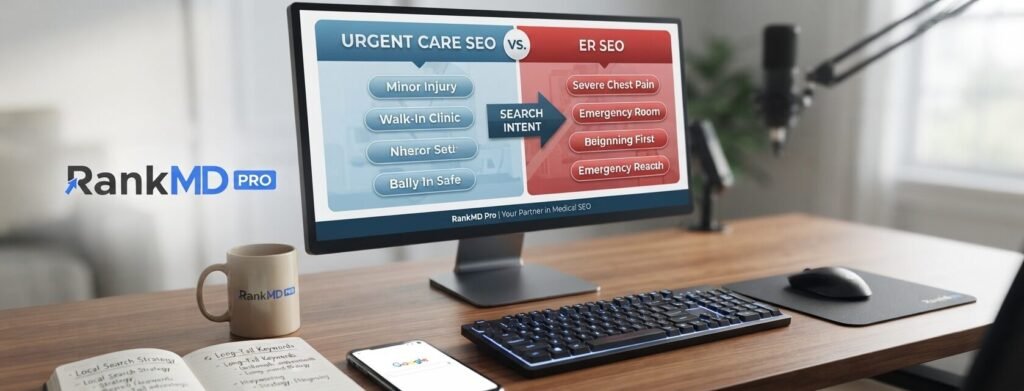
Urgent care SEO is the process of optimizing your website so your clinic appears in search results when patients need immediate, non-emergency medical attention. These patients are often dealing with minor injuries or illnesses and want to avoid the long waits of a hospital. Effective walk-in clinic marketing targets common queries such as “urgent care near me,” “walk-in clinic near me,” or “urgent care open now.” By focusing on these high-intent searches, you ensure your clinic is visible to the exact audience it is designed to help.
What Is ER SEO?
ER SEO focuses on emergency care searches, which usually involve more critical, time-sensitive medical situations. These queries often include “emergency room near me,” “hospital emergency room,” or “ER for chest pain.” Because these needs are vastly different from minor health issues, successful medical practice SEO avoids misleading patients by trying to rank for these emergency-specific terms. Instead, it respects the boundary between routine care and life-saving emergency services.
Urgent Care vs. ER: Know the Search Intent
Search intent is the “why” behind a user’s search. Recognizing it is vital for your healthcare digital marketing strategy. For example, a patient searching “urgent care near me” is looking for a nearby facility, while one searching “ER for chest pain” requires an emergency department. Your website content must match the specific need of the user.
Target High-Intent Urgent Care Keywords
High-intent keywords are the most valuable part of any local SEO for doctors campaign. These terms suggest a user is ready to visit a clinic immediately. Examples include “urgent care open now,” “urgent care clinic near me,” and “urgent care for adults.” By capturing this traffic, you turn searchers into patients.
Build Strong Local SEO Pages
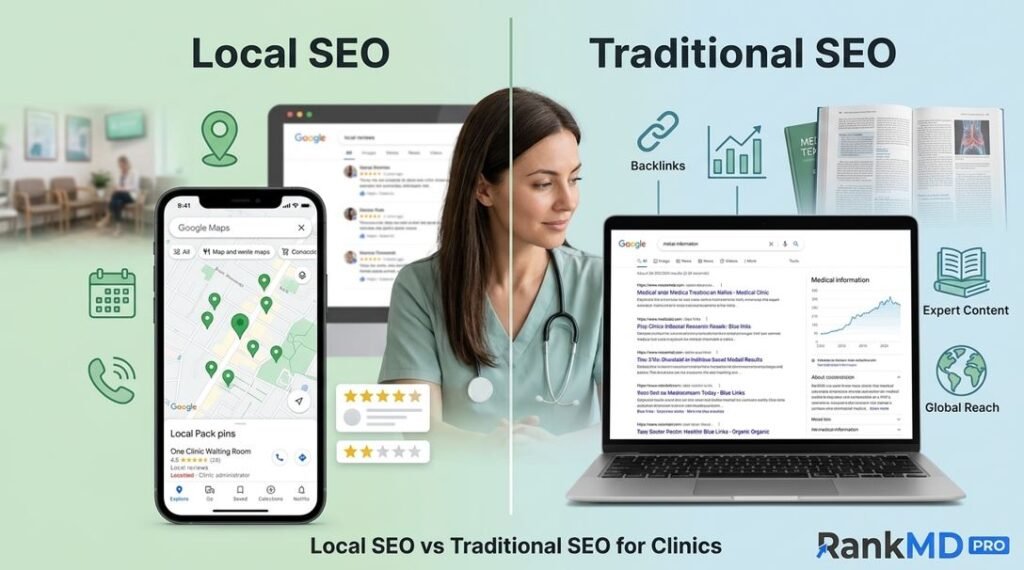
Local SEO is the backbone of clinic search engine optimization. Since patients usually search from mobile devices while looking for a clinic nearby, your Google Business Profile must be flawless. Ensure your clinic name, address, phone number, hours, and website are accurate. High-quality photos and active review management are also essential to building local trust and visibility.
Create Location Pages
If your practice has multiple sites, each location needs a dedicated, unique page. Do not duplicate content; instead, optimize each page for urgent care internet marketing by including the specific address, phone number, local hours, parking details, and answers to local patient questions. For example, a page titled “Urgent Care in Las Vegas” should be tailored to that specific community.
Create an Urgent Care vs. ER Page
This is perhaps the most useful page you can create for your urgent care website growth. It helps patients decide where to go, building trust through helpfulness. Explain that urgent care treats things like mild fever, flu symptoms, minor burns, or sprains, while the ER is for strokes, severe bleeding, or chest pain.
Use Comparison Keywords
Comparison searches are a great way to drive traffic. Many people search for “urgent care vs ER” or “ER vs urgent care.” By answering these queries, your medical SEO services strategy positions you as an authoritative source of medical information.
Do Not Target the Wrong ER Keywords
A major mistake in healthcare SEO optimization is trying to mimic an emergency room. Never suggest your clinic can handle life-threatening emergencies. Doing so hurts patient trust and safety. Instead, be transparent: “Our clinic manages non-life-threatening conditions. If you have severe symptoms, please head to the nearest ER immediately.”
Create Content Around Patient Questions
The best content addresses real-world concerns. Think about what your patients ask daily like “Can urgent care do X-rays?” or “Do I need an appointment?” Answering these through a thoughtful urgent care content strategy helps you rank for specific, helpful search terms.
Use Long-Tail Keywords
Long-tail keywords are more specific and often have less competition. Instead of just targeting “urgent care,” try “urgent care for an ankle sprain near me.” This specific approach is a core tactic in modern urgent care SEO.
Optimize Your Page Titles
Your page title is the first thing a user sees. Keep it clear, concise, and include your primary keyword at the beginning, such as: “Urgent Care Near Me: Walk-In Care and Same-Day Visits.” This helps both Google and your patients understand your services instantly, which is vital for SEO for urgent care clinics.
Write Better Meta Descriptions
A meta description is your chance to earn a click. Keep it simple and relevant, for example: “Learn the differences between urgent care and the ER. Find out where to go for minor injuries and illnesses.” This clarity improves your medical marketing services click-through rates.
Improve Internal Linking
Internal links connect your content, helping users navigate your site while boosting website optimization for doctors by showing Google which pages are most important. Link your comparison pages to specific service pages like flu care, lab testing, or X-rays.
Make Your Website Mobile-Friendly
Most patients search for care on their phones. Your site must be fast, readable, and easy to navigate. If a patient can’t find your phone number or directions within seconds, they will leave, which negatively impacts your mobile SEO for urgent care rankings.
Use Clear Calls to Action
SEO leads users to your site, but calls to action turn them into patients. Use simple buttons like “Book Appointment,” “Get Directions,” or “Call Now” to improve the performance of your urgent care lead generation efforts.
Final Thoughts
Effective urgent care SEO is about reaching the right patient at the right time. By matching patient intent with clear, honest content, you build a clinic that is both visible and trusted. If you are looking for professional assistance to grow your clinic’s digital presence, visit the experts at RankMD.
Frequently Asked Questions:
-
Should an urgent care clinic rank for ER keywords?
Only for educational purposes. Never claim to provide emergency care if you are an urgent care clinic; focus your urgent care SEO on appropriate services. -
Should I create an urgent care vs ER page?
Yes, it is excellent for patient education and helps you rank for comparison-based searches. -
How can urgent care clinics improve Google rankings?
Focus on high-quality content, local SEO, honest patient reviews, and site speed through professional medical SEO. -
Are Google reviews important for urgent care SEO?
Absolutely. Reviews build local trust and are a major ranking factor for local searches. -
Can blogs help urgent care SEO?
Yes, they are perfect for targeting long-tail queries and answering patient questions via urgent care blog marketing.