
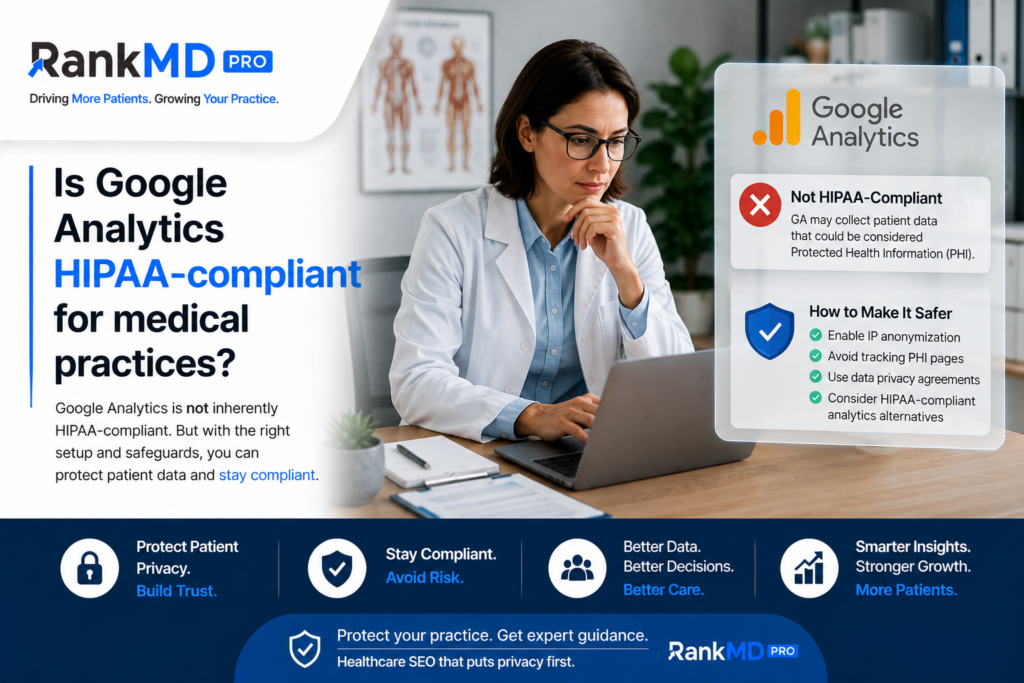
Google Analytics is not a HIPAA-compliant solution for handling PHI. Google states that it does not represent Google Analytics as HIPAA-compliant and does not offer a Business Associate Agreement for the service. Medical practices therefore need to prevent Google Analytics from receiving PHI and carefully evaluate where tracking is installed.
RankMDPro’s healthcare SEO approach can help practices measure search performance while keeping privacy and medical marketing compliance considerations in the SEO workflow.
Why Google Analytics Creates a HIPAA Concern
The issue is not simply whether a website has Google Analytics installed. The important question is what information the tracking technology collects or sends to Google.
Google’s own guidance says HIPAA-regulated organizations must not use Google Analytics in a way that gives Google access to PHI. It specifically advises against placing Analytics on authenticated pages and healthcare-related pages where PHI could be collected.
HHS also explains that online tracking technologies can transmit information such as IP addresses, device identifiers, appointment information, or information entered into healthcare forms. When that information constitutes PHI, HIPAA obligations apply.
What Should a Medical Practice Do?
A practical review should include:
- Audit every tracking script: Check Google Analytics, advertising pixels, session-recording tools, and tag-manager configurations.
- Identify sensitive workflows: Pay particular attention to appointment forms, symptom tools, patient portals, registration pages, and other healthcare interactions.
- Prevent PHI transmission: Do not send names, emails, appointment details, symptoms, diagnoses, or other sensitive information into Analytics.
- Review vendors and BAAs: If a tracking vendor receives PHI in a covered relationship, HIPAA requirements may include an appropriate BAA.
The SEO Measurement Problem
Removing or restricting tracking does not mean a practice must stop measuring SEO. You can still evaluate organic visibility, Local SEO, Map Pack performance, high-intent rankings, technical SEO, and patient acquisition trends using an appropriate measurement setup.
For example, a dermatology practice could measure growth in searches for its treatment and location pages without building analytics events around sensitive patient information.
The biggest mistake is assuming that a cookie banner or privacy-policy statement automatically makes tracking HIPAA-compliant. HHS states that simply informing visitors through a privacy policy or cookie banner does not by itself authorize an impermissible disclosure of PHI.
Explore RankMDPro’s healthcare SEO strategy to build an SEO measurement framework that prioritizes useful performance data without treating patient privacy as an afterthought.
If Google Analytics is installed on your medical website, audit the tracking configuration not just the analytics dashboard. Identify what data each tag can access before deciding whether it belongs on the site.