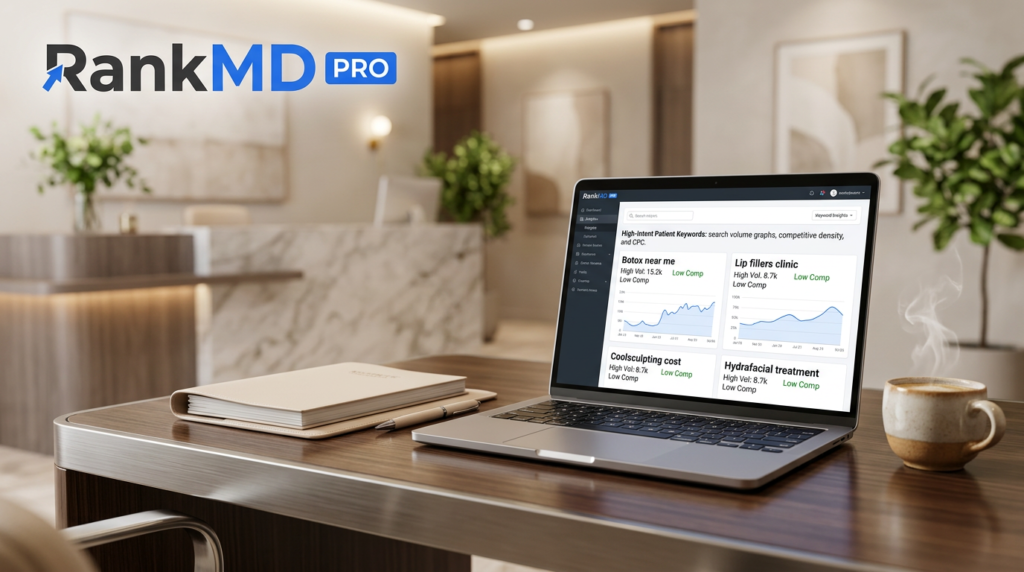
The most beneficial medical spa keywords are not necessarily the ones that attract the highest overall search volume. Instead, they are the terms that carry heavy commercial intent, such as “Botox clinics nearby” or “lip fillers in [city].” RankMD conducts deep, data-driven research to establish the exact keywords needed to attract prospective clients who are genuinely ready to book treatments. Incorporating professional aesthetic SEO services ensures your keyword targeting drives real business growth.
Why Most Keyword Strategies Fail Med Spas
The vast majority of online searchers are merely looking for general information rather than booking a service right away. This means websites that target the wrong keywords can attract thousands of casual visitors who never actually call or schedule an appointment. A massive visitor count does not guarantee a high number of clinical bookings. Supported by targeted med spa SEO strategies, your practice can avoid this common trap.
A few reasons this happens include:
-
High volume does not mean high intent: Broad healthcare terms get searched constantly, but most of those searchers are not your ideal prospective patient.
-
Competition keeps rising: An increasing number of medical spas invest in keyword-focused content every year, making generic targeting far less effective.
-
Generic keywords waste budgets: Vague terms bring idle browsers rather than active consultations, leaving you paying for traffic that never converts.
How RankMD Approaches Med Spa Keyword Research
RankMD develops comprehensive keyword strategies based closely on your specific clinical services, exact physical location, and the natural ways patients search online, rather than chasing hollow search volume metrics.
1. Patient Intent Mapping
We carefully distinguish between casual researchers who are purely looking for educational facts and high-intent prospects who are serious about scheduling a medical consultation, enhanced by medical practice growth plans.
2. Treatment and Location Targeting
Instead of focusing on broad, generic keywords, we pinpoint the exact phrases patients type when searching for local providers, such as “Botox in [city],” backed by professional aesthetic digital marketing expertise.
3. Competitor Gap Analysis
We thoroughly analyze the keyword rankings of competing local clinics to identify high-value search terms driving traffic, alongside strategic gaps and oversights that your practice can easily exploit.
4. Long-Tail Keyword Expansion
We focus heavily on specific long-tail search phrases rather than generic, hyper-competitive words that usually yield unpredictable conversion results, guided by medical website optimization.
5. Branded and General Keyword Mix
RankMD employs a balanced mix of branded terms alongside core generic keywords, allowing our clients to gain steady online visibility through both direct brand searches and general service queries.
6. Local Profile Optimization
The targeted keywords identified during our research extend far beyond your website; we also integrate them directly into your Google Business Profile, helping your pages rank organically and across local map packs with help from specialized healthcare SEO professionals.
7. Ongoing Tracking and Refinement
Keyword research is an evolving, continuous process at RankMD. We review performance metrics every month and refine our strategy quarterly to adapt to changing seasonal trends and patient demands, supported by aesthetic clinic marketing campaigns.
Keyword Research Built for Every Treatment
-
Botox and Injectables: Capturing high-intent local searches like “Botox near me” and expression line treatments.
-
Laser Hair Removal: Built precisely around regional search terms in your specific service area, optimized through medical backlink campaigns.
-
Dermal Fillers: Targeting specialized facial volumization and lip filler searches specifically.
-
Body Contouring: Identifying exactly how patients search for advanced non-invasive fat reduction treatments.
-
Skin Rejuvenation: Covering medical facials, chemical peels, and advanced skin resurfacing searches.
Dedicated Pages, Not Combined Ones
Instead of packing all clinical information onto a single cluttered web page, RankMD creates separate, dedicated pages for each individual treatment. Each page features its own primary target keyword and supporting cluster terms, ensuring every single page is fully equipped to rank independently in search engines.
Final Thoughts
Targeting the wrong keywords results in wasting money on meaningless, low-quality web traffic. RankMD focuses entirely on med spa keyword research built around real patient intent regarding which specific treatment they want and where to get it. If you are looking to elevate your practice with expert strategies, visit the RankMD Pro Agency today.
Frequently Asked Questions:
1. What’s the difference between high-volume and high-intent keywords?
High-volume keywords are popular terms that offer mainly general research information, while high-intent keywords are specific search phrases like “Botox near me” that clearly indicate a user wants to book an appointment.
2. How often should a med spa keyword strategy be updated?
RankMD adapts and updates its keyword strategy every three months to account for shifting search trends, seasonal demand fluctuations, and changes in the clinical services your practice offers.
3. Should I target broad terms like “medical spa” or specific treatment terms?
Specific treatment terms perform much better in terms of actual conversions. Broad keywords increase raw website traffic, whereas specific keywords guide users much closer to scheduling an appointment.
4. What are long-tail keywords, and why do they matter?
Long-tail keywords are longer, more detailed search phrases, such as “Botox cost near me.” They typically feature lower competition than broad terms and offer a significantly higher chance of conversion.
5. Do location-based keywords actually make a difference?
Yes. Combining core treatment keywords with local geographic modifiers, such as “near me” or specific city names, dramatically boosts your ranking visibility for local patients.
6. How does competitor research improve my keyword strategy?
Uncovering which keywords your local competitors are ranking for helps identify untapped opportunities and areas for improvement in your own organic marketing approach.
7. Can keyword research help with Google Business Profile too?
Indeed. RankMD applies the exact same researched keywords to optimize your Google Business Profile, thereby boosting both your local map rankings and traditional organic search presence.
8. How long before new keyword targeting shows results?
Initial signs of progress can often be observed within a couple of months, with more stable, dominant rankings developing over 6 to 12 months as your site content and domain authority grow.