We’ve put together this simple guide to help your dental website actually bring in more patients instead of just sitting there looking nice.
This breaks down the main things you should focus on so your site gets more enquiries and helps your practice grow.
1. Know your audience first
This part is honestly the most important thing in the whole guide. Even if you don’t read everything else, read this.
Who are your ideal patients?
If you want more patients, you need to know exactly who you’re trying to attract.
Think about things like:
- Their age
- Where they live
- What dental problems or worries they have
Doing this helps you stop guessing and actually target the right people.
The best way is proper market research, but if you can’t do that, you can just look at your current patients and group them by similarities.
Once you’ve done that, pick the group you want more of.
Then create a “patient persona” (basically a made-up profile of your ideal patient). It helps you clearly picture who you’re talking to.
Yes, it takes a bit of effort, but it makes everything else way easier.
What problems do they have?
Now think about what your ideal patients are worried about.
Common ones are:
- Fear of the dentist
- High costs
- Finding appointments easily
Your website should directly answer these concerns.
For example:
- Add a page explaining payment plans if people worry about cost
- Create a page for nervous patients explaining what visits are like
The idea is simple: if you understand your patients, your website becomes way more convincing.
2. Make your website easy to use
Now that you know your audience, your website needs to actually work well.
Mobile-friendly design
Most people are on their phones, so your site has to look good and work smoothly on mobile.
Fast loading speed
If your site is slow, people will just leave.
You can improve speed by:
- Compressing images
- Reducing unnecessary code
- Using caching tools
- Using a CDN
Easy navigation
People shouldn’t have to think too hard to find stuff.
Make sure things like services, prices, contact info, and booking are easy to find.
Clean page layout
Each page should have one clear purpose.
Break content into sections, use headings, and don’t make people read huge walls of text.
Also:
- Keep designs familiar (logo top left, menu at top, etc.)
- Use images and videos to explain things
- Don’t spam too many buttons everywhere
3. Write content that actually convinces people
This is where you either win or lose patients.
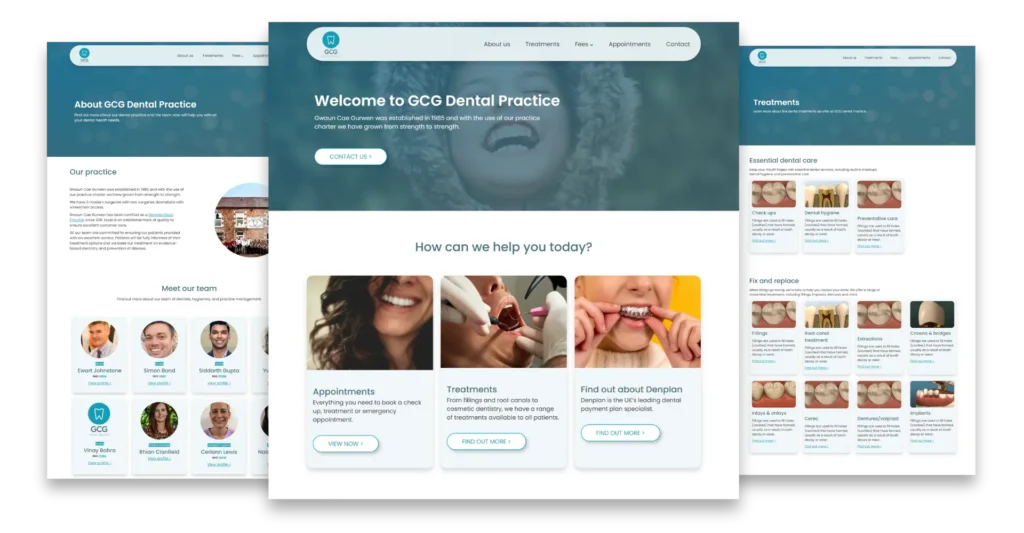
Homepage
Your homepage should quickly explain:
- Who you are
- What you do
- Why someone should choose you
Keep it clear and welcoming.
Service pages
Don’t just list services — explain them properly.
Include:
- What the treatment is
- Why it helps
- Patient reviews if possible
Avoid complicated medical language.
Blog content
A blog helps you answer common questions like:
- How to brush properly
- What happens during treatments
- Dental tips
It also makes your site look more trustworthy.
4. Use CTAs (calls to action) properly
If people don’t know what to do next, they’ll leave.
Where to place them
Put buttons like:
- “Book Appointment”
- “Contact Us”
- “Schedule Consultation”
But don’t overdo it or it gets annoying.
You can also make them more appealing like:
- “Start your smile journey”
- “Get whiter teeth today”
Make booking easy
If possible, add online booking.
The fewer steps it takes, the better.
5. Build trust
People won’t book if they don’t trust you.
Reviews and testimonials
Show real patient feedback. Even better if you mix written and video reviews.
Certifications
Add logos of qualifications, awards, or memberships.
It makes your practice look more professional and safe.
6. Use SEO and local search
This helps people actually find your website.
Basic SEO
Use keywords in:
- Titles
- Headings
- Page content
Make sure each page targets a specific search term.
Local SEO
This is huge for dentists.
- Keep your Google Business Profile updated
- Add your address and phone number everywhere
- Get more reviews
7. Social media and engagement
Connect your socials
Link your website with Instagram, Facebook, etc.
Post things like:
- Before/after results
- Patient stories
- Behind-the-scenes content
Online reviews
Ask happy patients to leave reviews.
Also reply to reviews so people see you actually care.
Final thoughts
Improving your dental website isn’t a one-time thing, but if you get these basics right, you’ll start seeing more enquiries.
Focus on:
- Knowing your audience
- Making your site easy to use
- Writing clear, helpful content
- Using CTAs properly
- Building trust
- Improving SEO
Keep testing and improving things over time.
If you don’t have time to do all this yourself, there are services that can handle it for you and build everything properly.